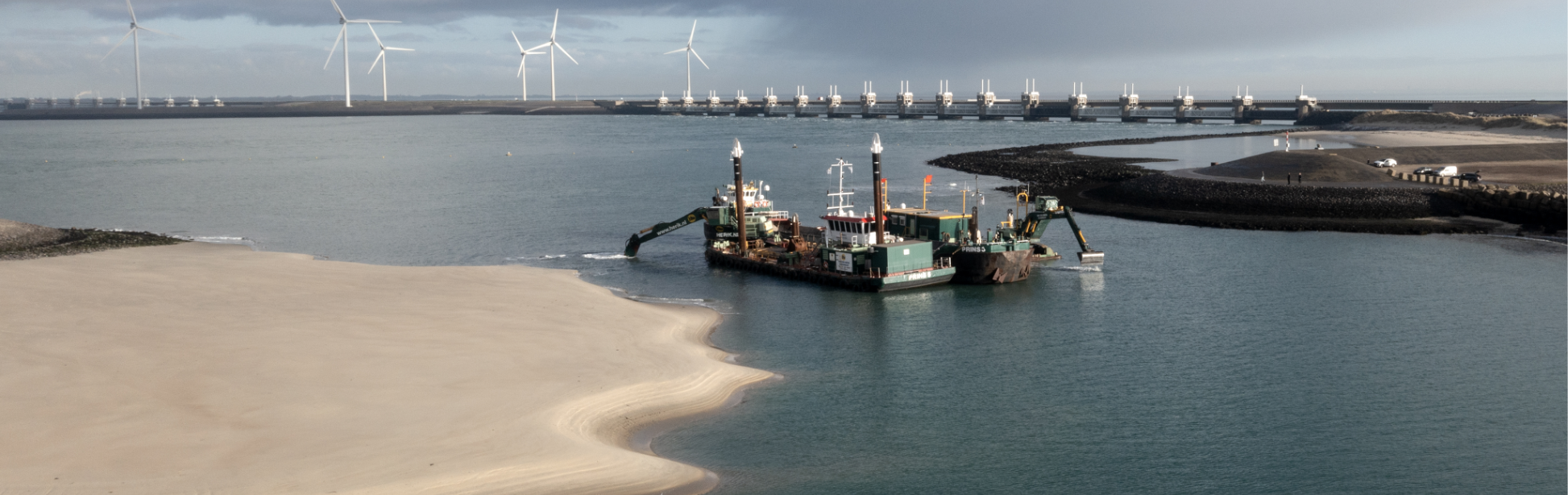
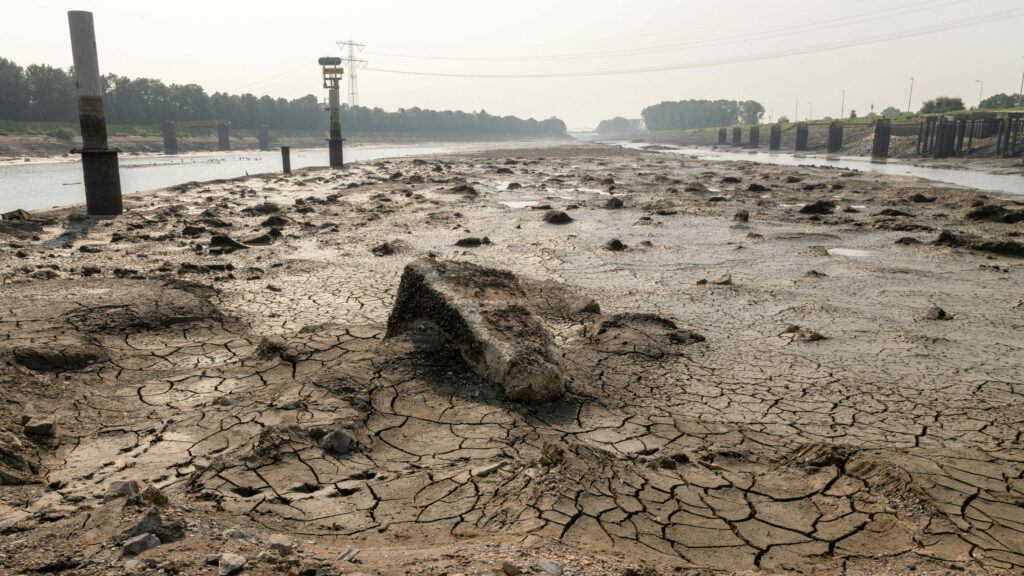
Whereas waterways used to be determined by natural conditions, later people devised all kinds of techniques to manage and expand the waterway system. A well-known example in the Netherlands is the canalization or normalization of the Meuse by constructing weirs and locks (wet infrastructure). Constructing canals and regulating rivers by installing groynes are also well-known examples. The waterway system and wet infrastructure are a crucial pivot in our economy as well as for our safety, water quality and environment.

Managing and improving canals and rivers
Maintaining the depth of waterways, protecting bottoms and banks, widening canals and constructing fish passages are activities we are good at. From both land and water, we carry out projects to manage and improve waterways and wet infrastructure.

With our diverse and specialized fleet of equipment, broad civil engineering expertise and innovative approach, we are able to tackle a wide range of projects and provide customized solutions. As passionate hydraulic engineers, we enjoy contributing to improving the waterways and wet infrastructure that have shaped our past and are shaping our future.

Working on our waterways

A beautiful and current example of our work is the widening of the Juliana Canal between Berg and Obbicht. The canal is being widened over a length of about 3 kilometers.

This complex section of the canal will receive a new water inhibiting bottom layer and bottom protection. In the process, the eastern bank and adjacent dike must be partially relocated. A project in which we use our various areas of expertise, such as our knowledge of dredging, soil protection and dry earthwork. We are deploying both wet equipment (including crane and hopper barges) and dry equipment (including dumpers and hydraulic cranes).

Read more about the widening of the Juliana Canal

Managing wet infrastructure

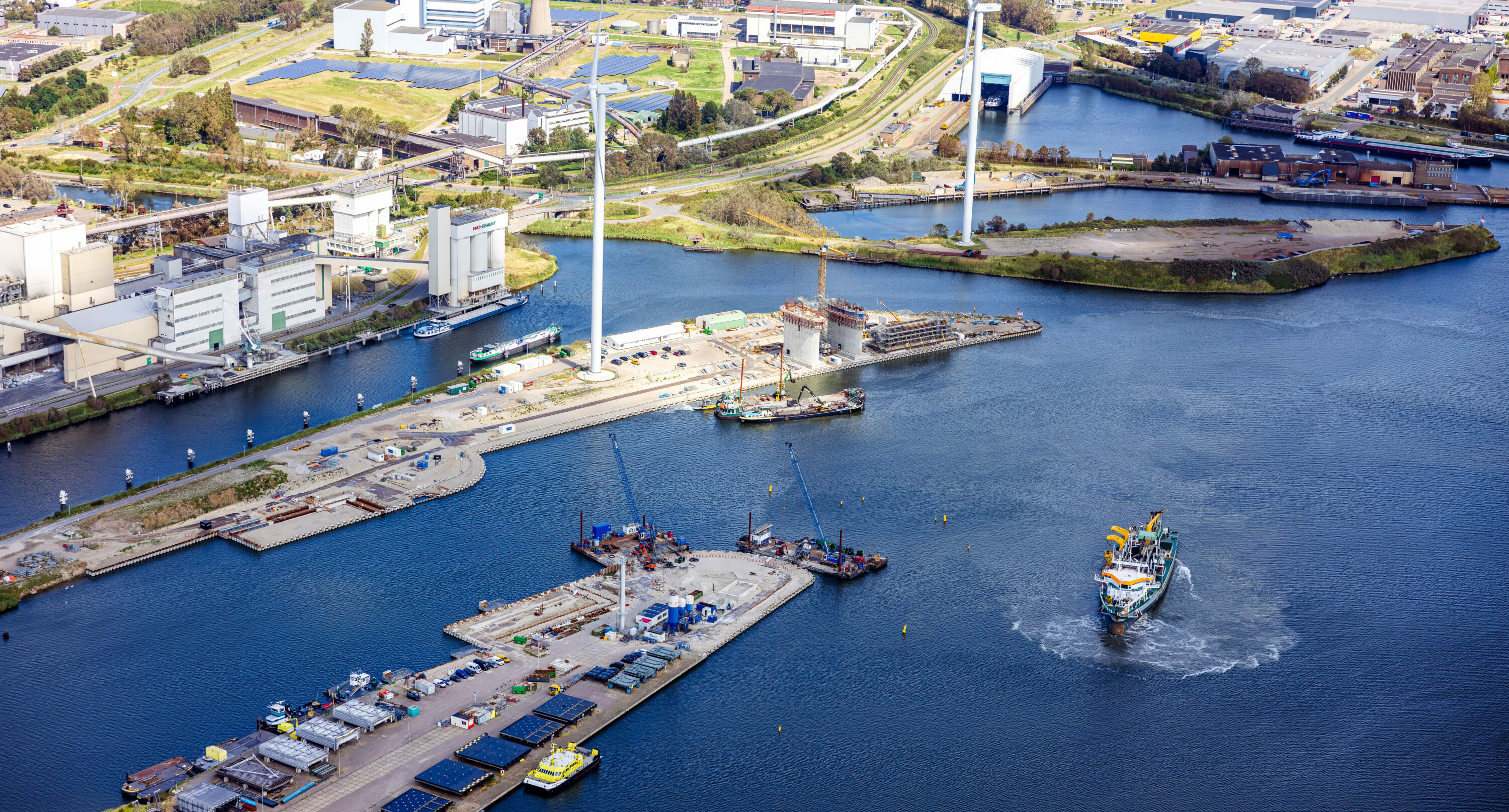
Another example of our versatility is our contribution to the Selective Extraction IJmuiden (SOIJ) There we are collaborating on the construction of a salt dam. The salt dam will allow excess saltwater from the North Sea Canal to flow back into the sea.

As Van den Herik, we took care of the hydraulic engineering part using both wet and dry equipment. We dredged to a depth of as much as 23 meters, removed old stone deposits and installed new bottom protection. Part of this soil protection was installed at a depth of 23 meters. Real precision work that we successfully carried out thanks to detailed design, controlled execution and extensive monitoring by our survey department.

A unique piece of craftsmanship.

When the salt dam is completed, the salt water will flow through an opening at a depth of between -16 and -23 meters NAP. To keep the bottom around the salt dam in place, Van den Herik is installing 25 ha of bottom protection after dredging. We are using 13 mattresses, the largest of which is 125 meters long and 30 meters wide. The mattresses are made on land and then placed on the bottom.

More info on this project?

Remove old infrastructure

We not only construct, improve or replace infrastructure on and around the water, we also remove or demolish old infrastructure. Think of old pipes, culverts, jetties, or works of art.

These are specialized jobs that require customized solutions: and we are good at that! For example, to the great satisfaction of the client DPO, we have brought to the surface and removed kilometers of old oil pipelines of the Ministry of Defense on both the Hollandsch Diep and in the Maas.