


At the IJmuiden Lock Complex, we are carrying out various works related to the construction of a salt dam in the Binnenspuikanaal. By means of Selective Extraction, this dam ensures that the salt water from the North Sea Canal flows back to the sea and that the fresh water remains in the canal.
In conversation with Rijkswaterstaat, colleagues André Dekwaasteniet (project leader) and Arleen Overwater (superintendent) talk in detail about our work at the IJmuiden Sea Lock.
‘For Selective Withdrawal, no less than 455,000 m³ of soil will be dredged to a depth of -23 NAP.
André Dekwaasteniet explains why this is necessary: “We are deepening the Binnenspuikanaal so that saltwater will sink more easily into the depth towards the opening of the salt dam. This is because too much saltwater flows into the North Sea Canal via the IJmuiden sea lock. This is bad for nature and the environment. Through the opening of the salt dam, the salt water flows back to the sea through the pumping station.”
When the salt dam is completed, the salt water will flow through an opening at a depth between -16 to -23 meters NAP.
To keep the bottom around the salt dam in place, Van den Herik is installing 25 hectares of bottom protection after dredging. “We are using 13 sinkers for this, the largest of which has a length of 125 meters and a width of 30 meters. The sinkers are made on land and then placed on the bottom,” Dekwaasteniet said.
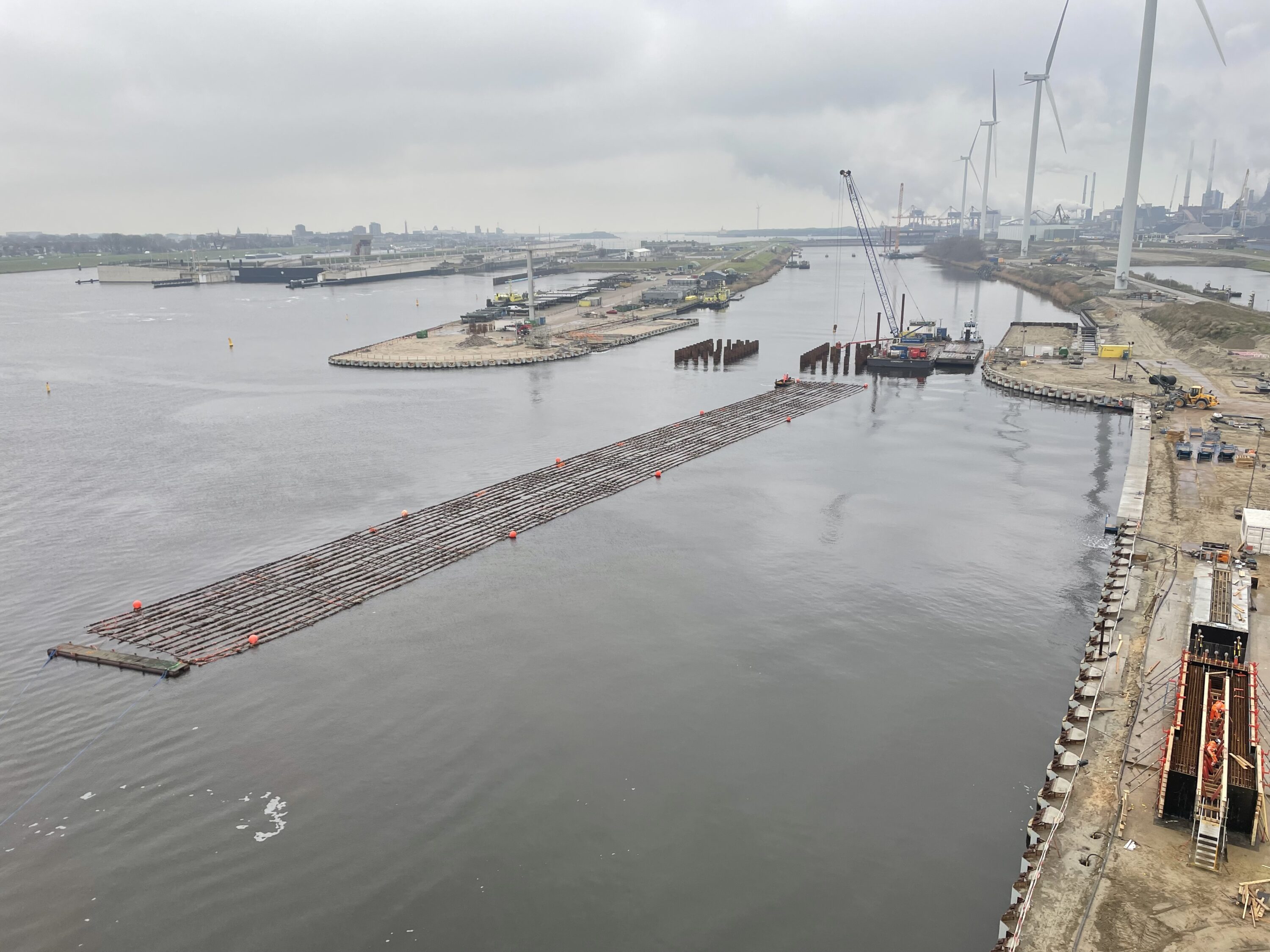
The zinc pieces are made partly by hand.
“They are constructed from a water-permeable mat, on which we tie braided cradles, also known as willow branches. The cradles keep the mat taut and afloat. Once the sinker is placed on the bottom by sprinkling stones on it and sinking, we apply more stones. That way the sinker stays in place,” said Arleen Overwater.