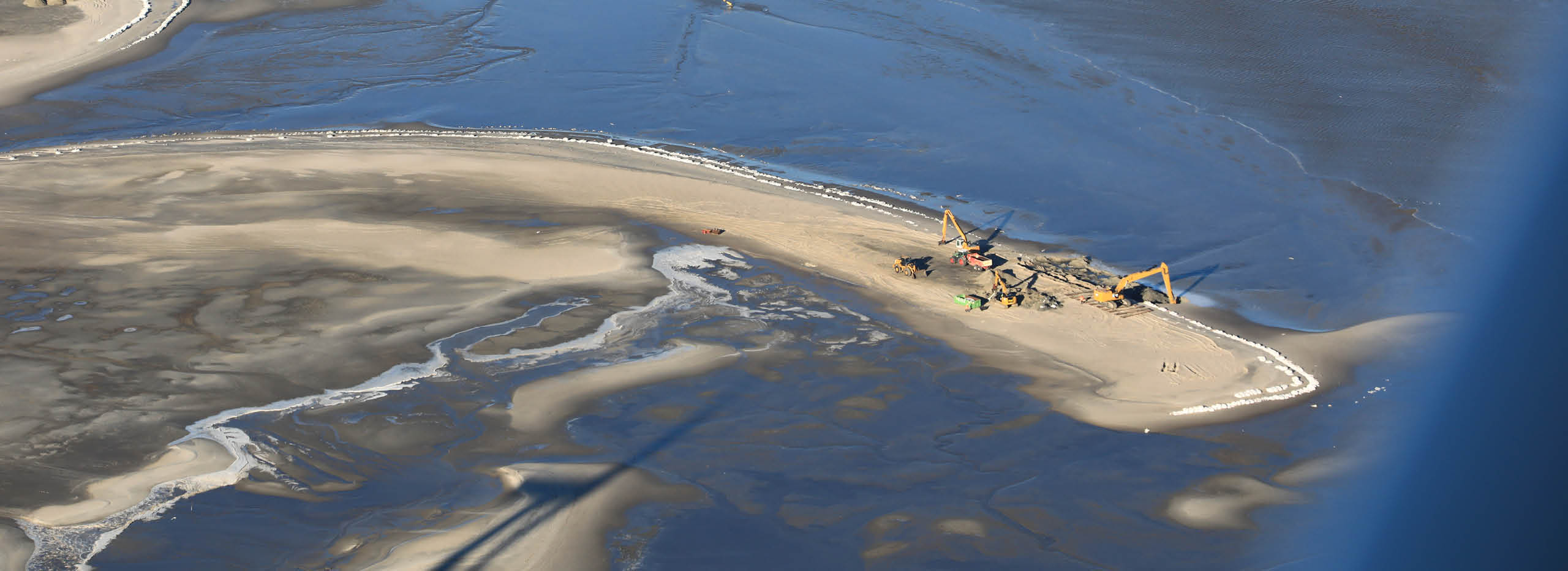
In recent years, the declining biodiversity and water quality of Dutch waters has been in the news a lot. The importance of nature development is becoming increasingly clear. We contribute to the improvement of nature and water quality with numerous projects.
Some of our projects specifically have nature development as their goal. Many of these projects originate from the European Water Framework Directive(WFD), but also in all our other works we never lose sight of the importance of nature. We take into account our impact on nature. We take ecological measures and minimize emissions.
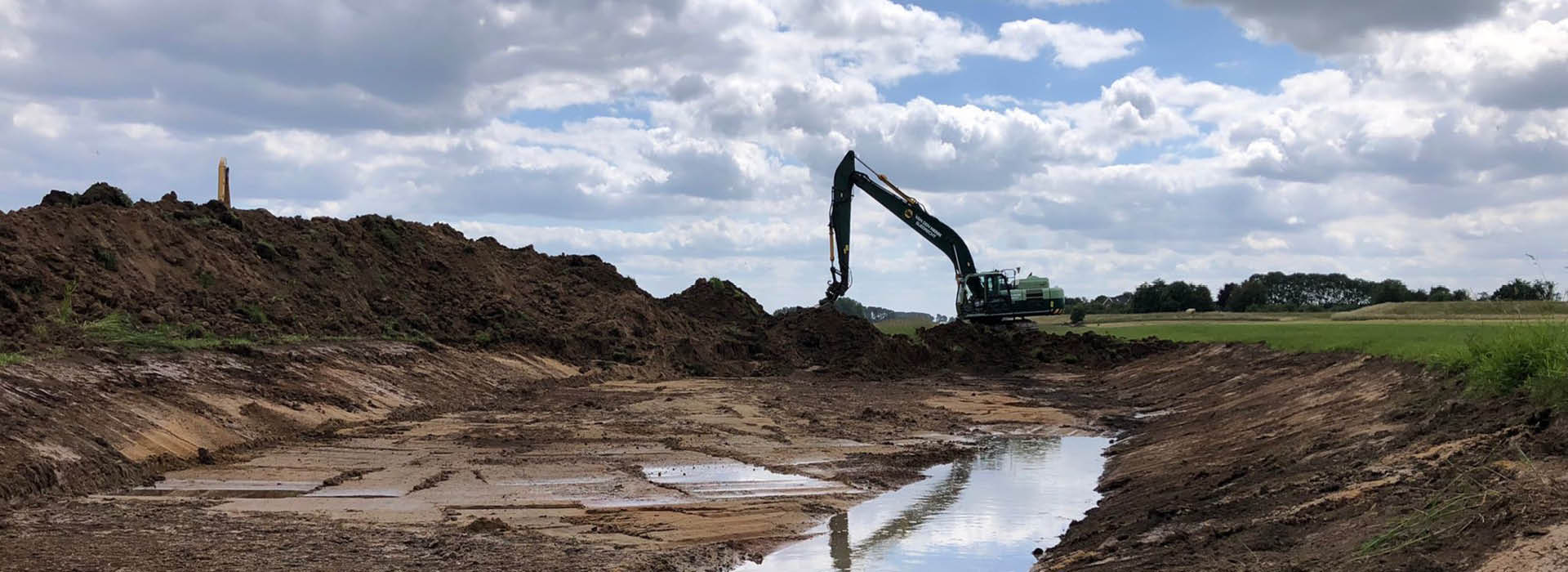
In the realization of the Ecological Optimization Cortenoever, we deepened the ancient creeks and channels in the floodplain. The reason for restoring the river nature are the WFD and the GNN Natura 2000 objectives. The deepening means the water is retained longer in the floodplain, even in dry periods.
Nature benefits from this. Because of the exceptionally long periods of both high and low water during the implementation of this project, our flexibility was an important success factor. At low tide, removal of soil was not possible because there was no room for the ships that transported the soil across the river.
At high tide we could not work because the flood plain was flooded. By constantly adapting the working method, phasing and planning to the current situation, we completed the work on time despite both the high and low water.
Even in projects not directly linked to nature development, we take advantage of opportunities to improve nature. Examples include nature-friendly banks, fauna exit points (fups) or the construction of tidal stages and channels.
For example, in the realization of new overnight sites near Bergambacht, we installed 14 biohuts. Biohuts are steel cages filled with stones or shells. These provide a perfect habitat for flora and fauna such as algae and mussels.
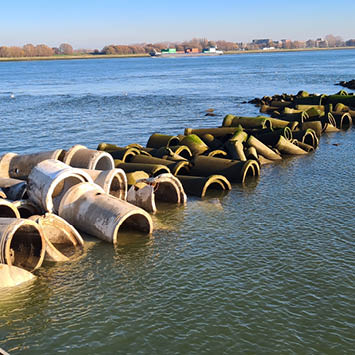
Near Rotterdam, we constructed the sewage pipe dam in Nieuwe Waterweg. In this playfully shaped dam of used sewage pipes, fish can find shelter and food.
“It doesn’t always have to be grand and compelling when it comes to promoting biodiversity. Sometimes you can also achieve great results in a relatively simple way. That way we can all make the world a little more sustainable. Small effort, big fun.”
Erika Gouw | Technical Advisor Rijkswaterstaat