


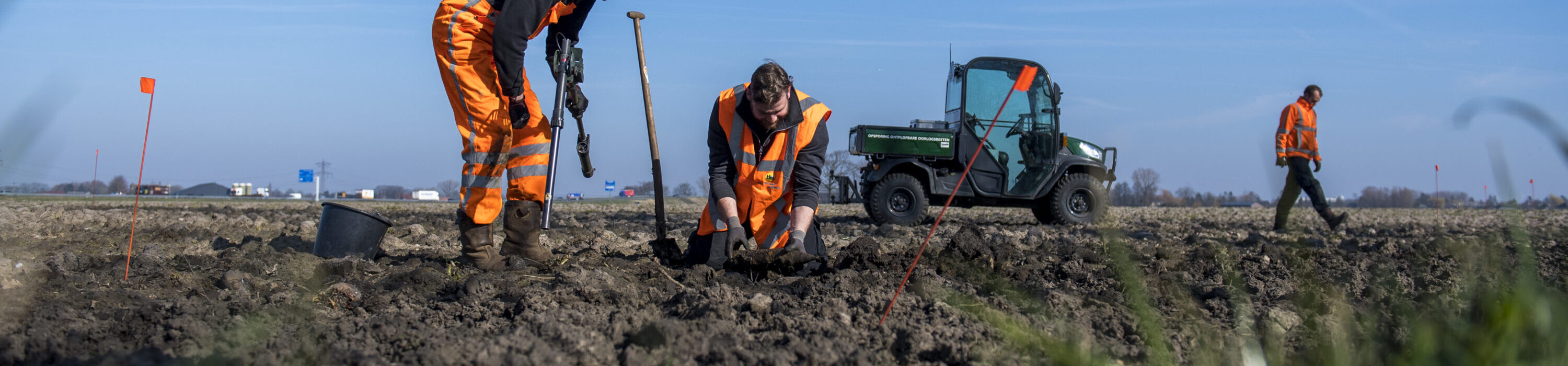
In our work as hydraulic engineers, we regularly come into contact with Explosive Remains of War (OO) still present in the soil. For this reason, locating these remnants of war has become one of our areas of expertise, both on land and in water. The Detection of Explosive Remains of War (OOO) or simply explosives detection requires a detailed approach from A to Z in which safety always comes first.
Such a process starts with a preliminary historical investigation by specialized historians with access to a large historical archive. When this reveals the suspicion of OO, it is our turn. Our trained and certified employees detect the soil. We approach suspected objects and, if necessary, secure them. The actual clearing of explosives in the Netherlands is always done by the Explosieven Opruimingsdienst Defensie (EODD).
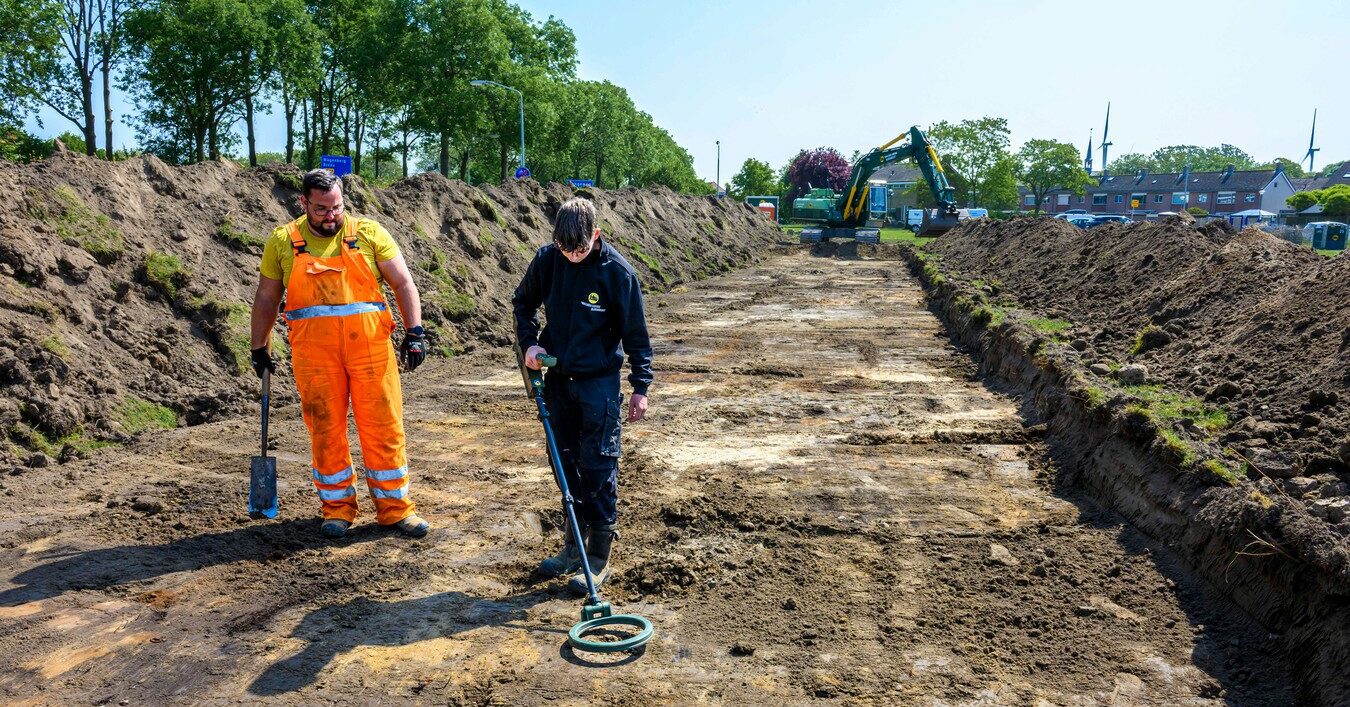
Our trained and certified staff detect the soil.
Environmental Management in Explosive Ordnance Detection
Explosive ordnance detection usually attracts a great deal of interest, especially in populated areas. The surrounding area often has concerns and questions. Through our years of experience, we know the impact that the work has on the client and the surrounding area. Clients often have a responsible role when it comes to ensuring safety. It is therefore important to know exactly what is going on. We keep short lines of communication and are transparent. We review and monitor the process and keep clients and, if desired, the environment involved in this exciting process.
When there are many stakeholders involved in a project, like at OOO Realization Loobeek Venray, planning and communication is hugely important. Here we detected an area of about 120 ha and approached a huge amount of suspected objects (8,701). The area is divided between many different landowners, especially farmers. It was important to minimize damage to the grasslands and fields during the work. To ensure smooth progress, we coordinated our own schedule, the farmers’ mowing, seeding and harvesting schedule and other seasonal factors. This in close cooperation with the client, Waterschap Limburg, and its advisors.