


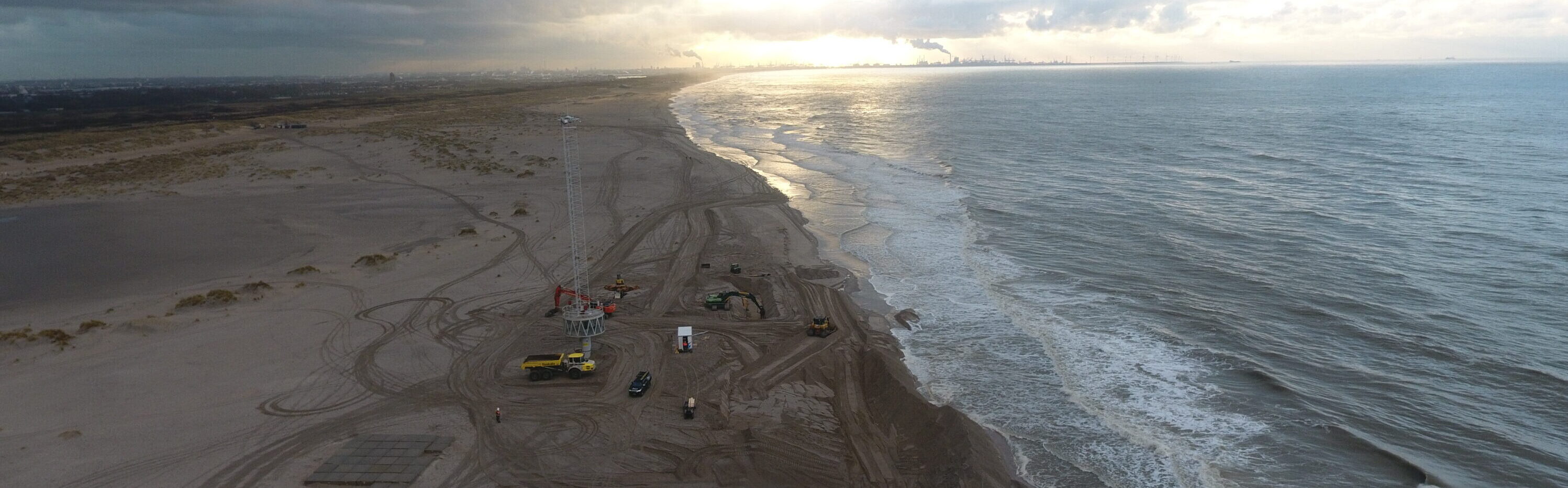
Commissioned by TU Delft, hydraulic engineering companies Van den Herik-Sliedrecht and Boskalis are working on the realization of some 100 meters of temporary hybrid “test dune” in which a number of combined hard and sandy coastal protection designs will be simulated. This impressive and unique field experiment is intended to show how hybrid dune structures erode during storms. It is taking place within the Future FRM Tech research program led by Postdoc researcher and Civil Engineer Daan Poppema, with support from NWO and Rijkswaterstaat.
100 meter ‘test dune’ between Monster and Kijkduin
The hybrid dune, composed of 4 different sections, was realized in early December. Each section of the test dune is about 25 meters long. The total dune is about 3 meters high over its entire length of 100 meters. The experiment is taking place on the beach between Monster and Kijkduin, where the Sand Motor is also located.
Two are stronger than one
The Dutch coast is traditionally protected by sandy dunes and hard dikes. It is increasingly common, as in Noordwijk, Katwijk and Groede, to realize protection with hybrid dunes, a combination of sandy dunes with a hard coastal defense. This offers the certainty of erosion resistance as an advantage of the dikes (hard coastal defense) and valuable nature and the ability to grow with the sea level as an advantage of the dunes (soft coastal defense). However, due to the complex interactions between the sandy and hard elements, storm surge proceeds differently in hybrid dunes compared to sand dunes and this is investigated in this test dune.
The best match
To investigate how erosion of the test dune and the front coastal profile occurs with hybrid and regular dunes and dikes, four different types are being tested. All with the front (seaward) and top in the same location, but with different construction. To simulate hybrid dune structures, hard elements are placed in and on the dune. We use sea containers and a hard dike slope made of concrete slabs (stelcon plates) for this purpose. These four types will be tested during the experiment:
1. Sandy dune composed entirely of sand
2. Dike-in-dune, with the hard dike slope under the sand
3. Dike, sand with the hard dike slope on top
4. Kering-in-duin, a hard core of containers in the dune
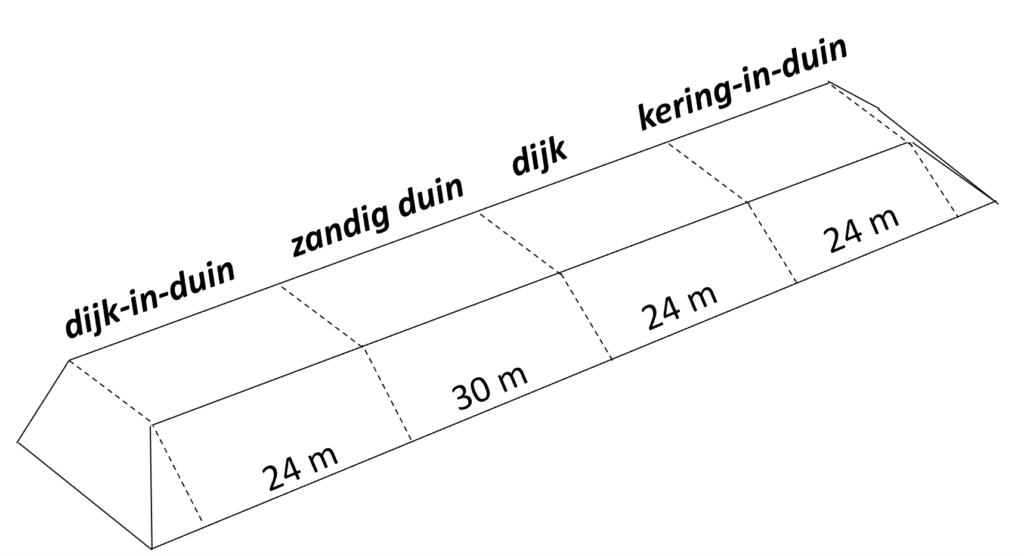
Figure 1: The 4 types of dune being tested. – ©TU-Delft
The goal of the Hybrid Dune research project is to better understand interactions between sandy and hard elements. This will help to design hybrid dunes more efficiently, effectively and safely in the future and to better predict how these hybrid dunes behave over time.
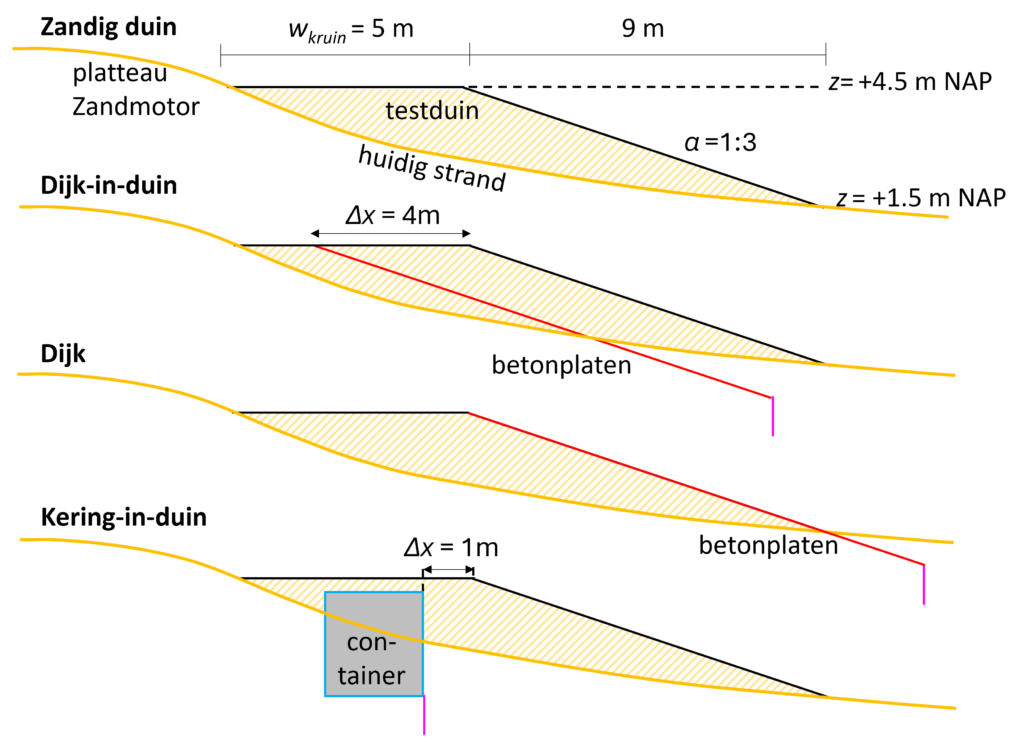
Figure 2: Schematic representation of the structures. – ©TU-Delft
Measuring in, on and around the dune
Over the next few months, close monitoring of how the test dune behaves and erodes through storms will be conducted. For this purpose, a wide range of measuring instruments will be deployed, measuring flow, wave action and dune erosion around the setup. At the end of the experiment, around February-March, the setup is removed again. Then begins the extensive analysis and modeling of the measurement data to investigate how different parts of the test dune have behaved.
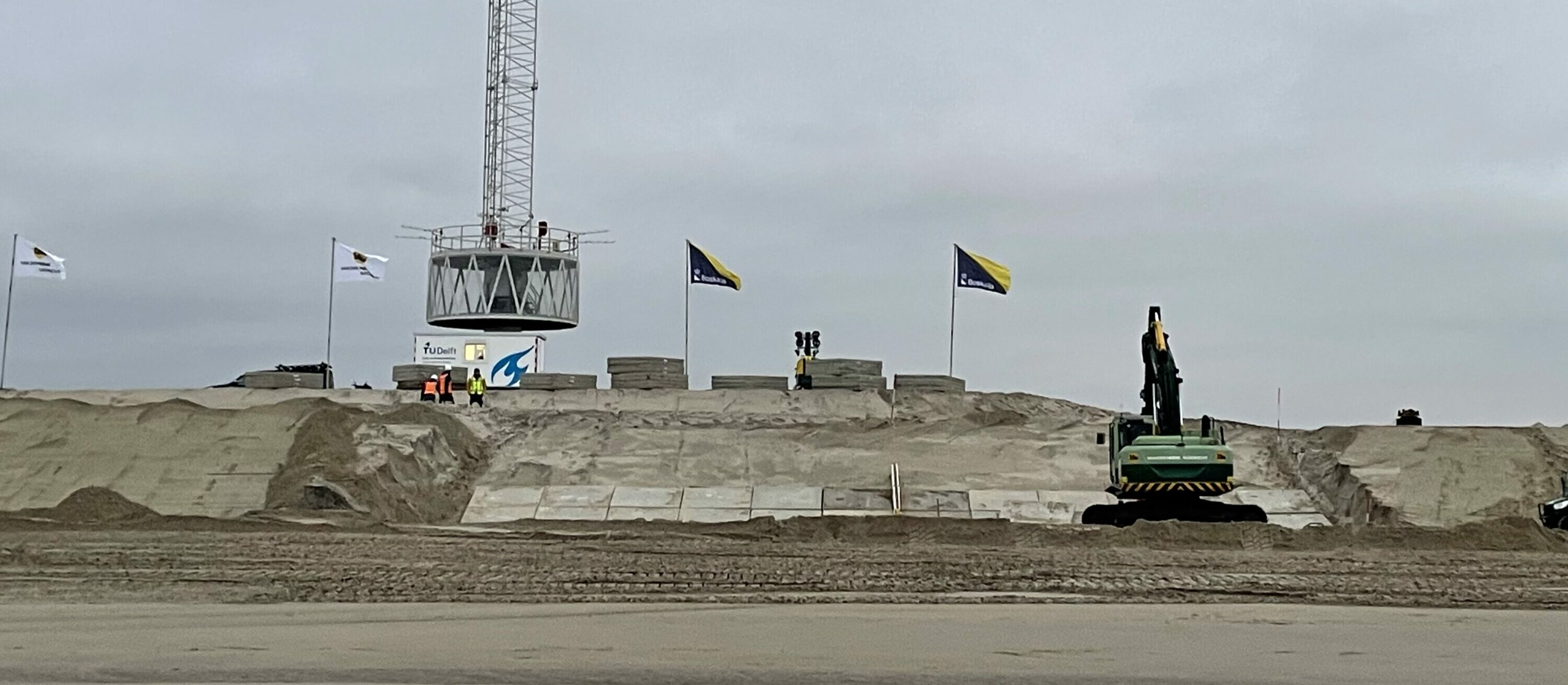
Construction Hybrid Dune
