


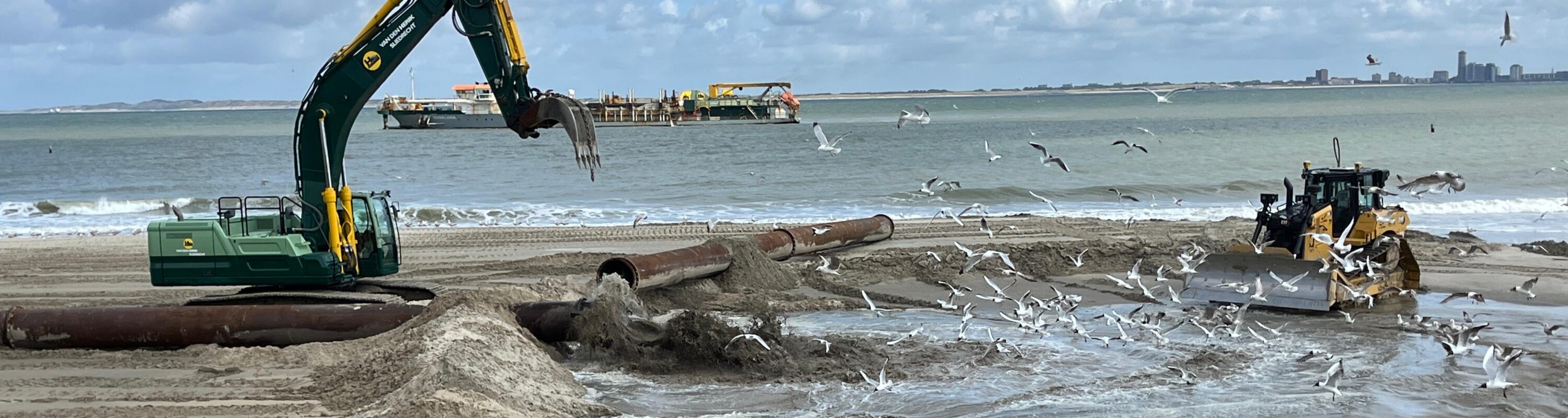
On behalf of the Department of Public Works, we started work on the beaches of Cadzand and Groede in mid-March. For coastal maintenance, we are bringing 610,000 cubic meters of sand from the North Sea at Cadzand using trailing suction hopper dredgers. Subsequently, the beach at Groede (between Nieuwesluis and Breskens) will be reinforced with 325,000 cubic meters of sand. This extra sand is needed to protect Zeeuws-Vlaanderen from the sea.
The beach and dunes are an important protection from the sea. But wind, waves and currents always take sand away from the coast. Rijkswaterstaat measures the Dutch coast every year and draws up a replenishment program based on that data. This is how the Dutch coastline is kept in place.
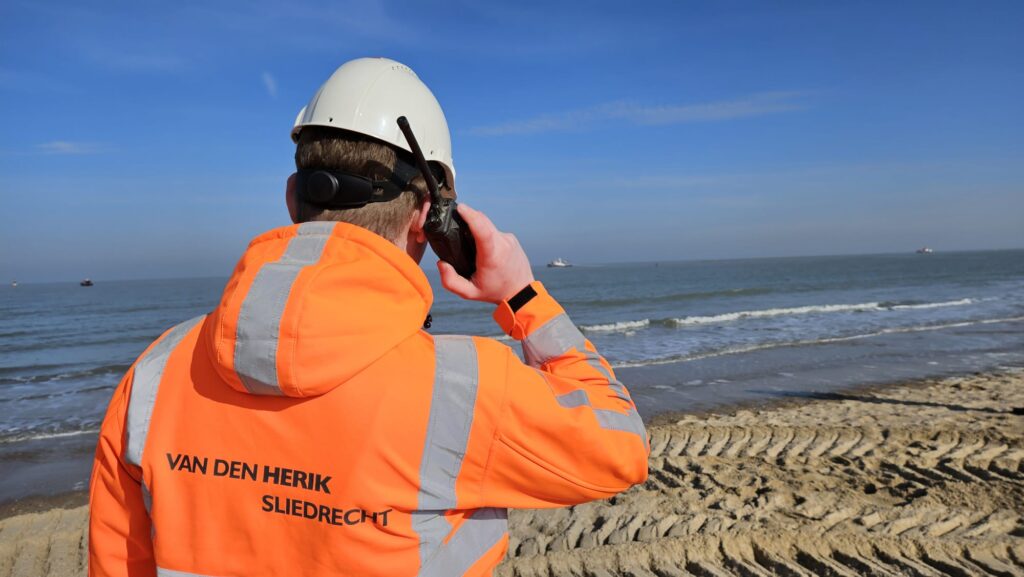
The work at Cadzand started on March 14 and will last about five weeks, depending on the weather and other factors. The work will take place on the beach between Cadzand Haven and the Verdronken zwarte polder. This will be followed by the beach at Groede, between Nieuwesluis and Breskens. Work is expected to take place here until the end of June. During the work, the work area is cordoned off. As soon as the applied sand is dry and firm enough to walk on, the beach will be available again for bathers.
‘Recreational sand fund‘
These sand replenishments are carried out to protect us from the sea. For municipalities along the coast of Zeeland, in addition to safety, it is also important to have enough dry sand on the beach for residents and tourists. In 2022, Zeeland’s coastal municipalities established a “recreational sand fund. The purpose of this sand fund, following the regular replenishment program, is to preserve the beaches for recreational use.
The work on Cadzand beach is part of a pilot with this sand fund. They will be carried out especially in the spring. Usually, contractors from Rijkswaterstaat are given two years to carry out a replenishment. Should this lead to higher costs, these are financed from the sand fund. In addition, additional sand will be applied in Cadzand on top of the already planned replenishment, at the expense of the sand fund.
Upon completion of the pilot, Rijkswaterstaat and the Zeeland coastal municipalities will evaluate the results together to determine whether this method can be applied more widely in the future.
