


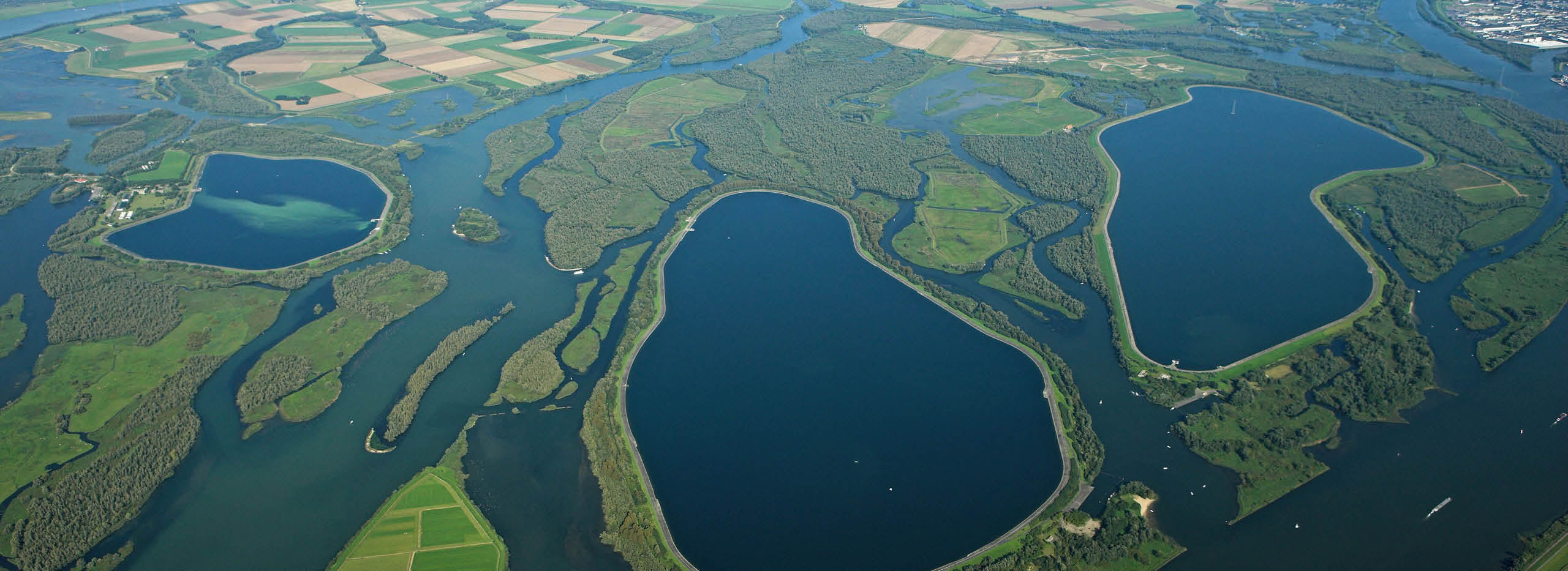
Onze ervaring en expertise ligt onder andere in het verdiepen en (her)ontwikkelen van natuurgebieden en uiterwaarden. Zo zorgen we ervoor dat water beter wordt vastgehouden in droge periodes. En dat er meer ruimte is om water te bergen op het moment dat er veel neerslag valt.
De Tongplaat bij Dordrecht en de Spuimonding in de Hoeksche Waard zijn mooie voorbeelden van hoe we meedenken over en werken aan waterretentie. Ook de Ecologische Optimalisatie Cortenoever is hiervan een goed voorbeeld. Dat was in eerste instantie een natuurontwikkelingsproject, maar draagt ook bij aan waterretentie. Die twee ontwikkelingen gaan vaak hand in hand.
Schoon drinkwater
Niet alleen in en rond rivieren en kanalen voeren we werkzaamheden uit. Ook in het spaarbekken De Gijster hebben we werkzaamheden uitgevoerd. Dit spaarbekken vormt een belangrijke zoetwatervoorraad voor de industrie- en drinkwaterproductie in Zuidwest-Nederland. Met deze voorraad aan zoetwater is het mogelijk droge periodes te overbruggen.
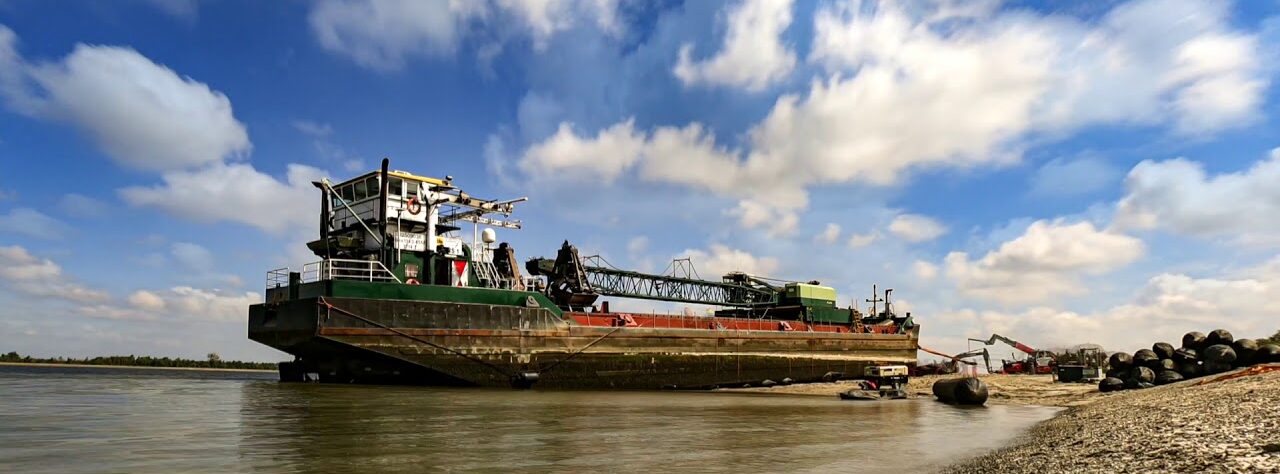
De schepen van Van den Herik zijn over land naar het spaarbekken getransporteerd.
Een bijzondere operatie
Omdat het spaarbekken niet in open verbinding met het vaarwater staat, hebben we onze schepen over land en water naar het spaarbekken getransporteerd. Een bijzondere operatie die is vastgelegd in onderstaande video. In het bekken hebben we vervolgens door te baggeren ondiepe zones verdiept en diepe putten weer opgevuld. Door speciale aanpassingen aan ons materieel hebben we de kwaliteit van het bekkenwater tijdens het werk niet verstoord.