


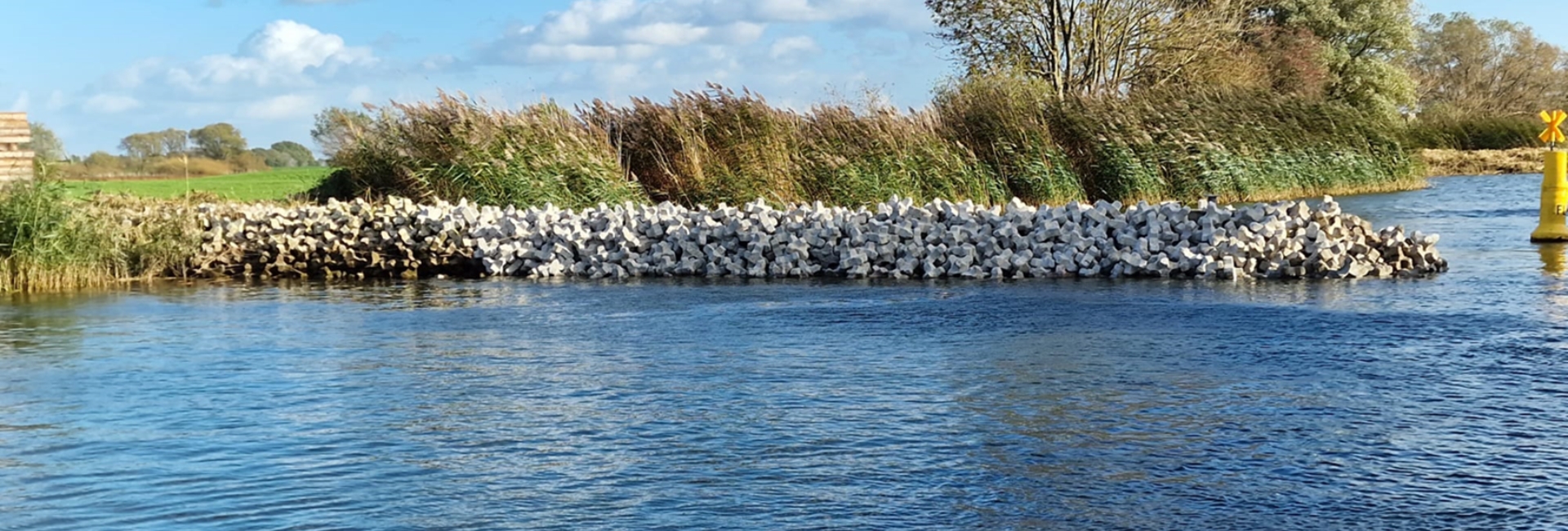
FLEXIBLE GROYNES IN THE IJSSEL NEAR KAMPEN
Van den Herik is working with BAM Infra Nederland, Rijkswaterstaat, Deltares and other partners on the development and application of flexible groynes in the river IJssel near Kampen. This pilot was part of the Learning Area in the former maintenance contract Twente canals and IJsseldelta. The Learning Space is a way to stimulate innovation in river maintenance and stems from the Self Supporting River System (SSRS) program.
Traditional groynes are fixed structures of sand, stone and geotextile that direct flow and keep the river in its course. They are difficult to adapt to changing conditions, such as water levels due to climate change. Flexible groynes offer an innovative solution here. They are constructed from Xstream blocks, a modular concrete system that hooks together without anchoring. This allows groynes to be built, raised or extended more quickly and easily.
Due to the open nature of the Xstream construction, about 60% of the groyne is water permeable, which contributes to more dynamic sediment transport and provides opportunities for aquatic flora and fauna. The cavities between the blocks provide habitat for plants and animals and contribute to biodiversity.
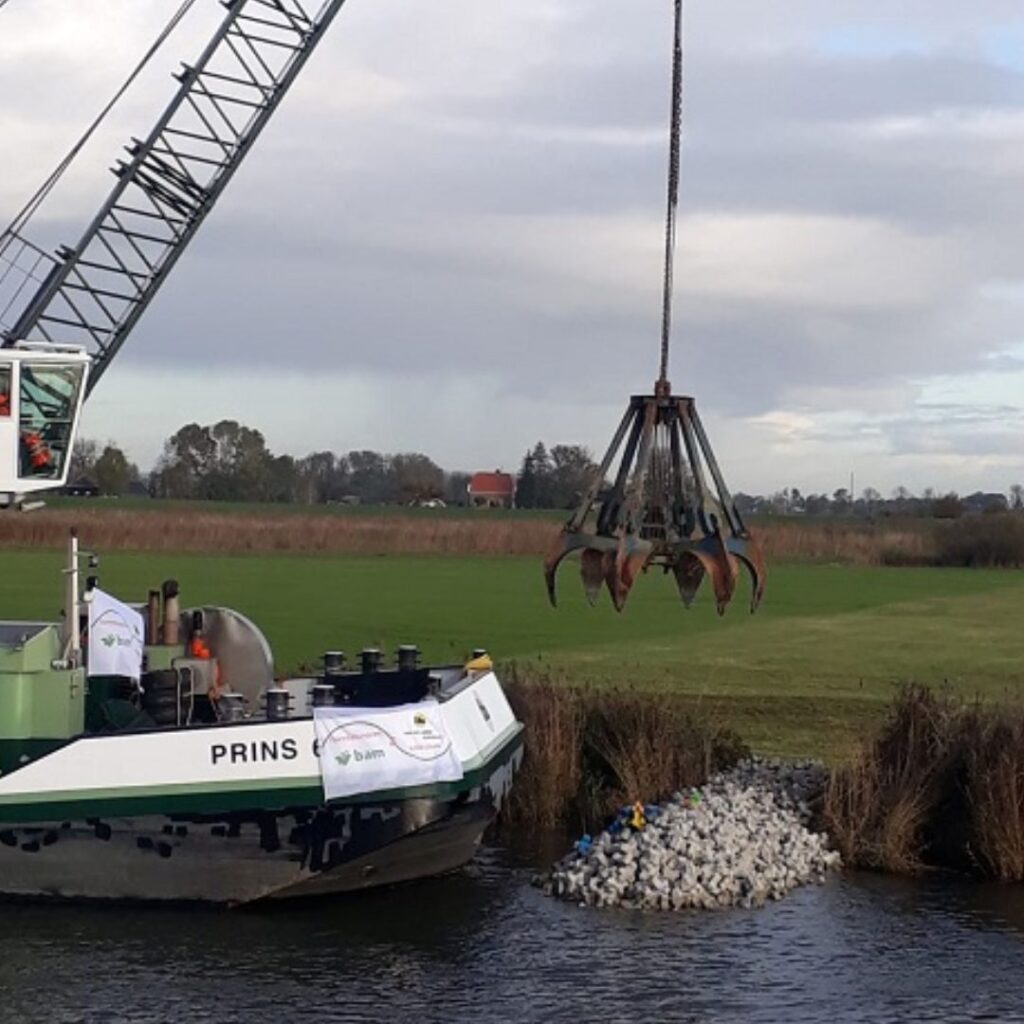
The first phase of the pilot began in late 2019 with the construction of three flexible groynes in the summer bed of the river IJssel. The pilot was extended and monitored to evaluate stability, operation and effects on ecology and river management and extended into 2022, with BAM, Rijkswaterstaat, Van den Herik, Deltares, Aquatic Drones, Meteor Concrete and Beeliners still involved today.
For Van den Herik, the focus is on applying the blocks in the river, working closely with BAM and other team members to put this innovative method into practice. The experiences from this pilot will contribute to more sustainable and flexible river maintenance in the Netherlands. More info:
